
Silver can play a modest but useful role in a family’s savings plan. Households that notice the Silver Rate Today in Delhi rising during festive weeks often wonder whether they should buy more, but a strategy built on a single day’s price rarely works well. Those who follow the Silver Rate in Hyderabad over many months learn that patience matters more than perfect timing. This article presents a practical framework for building a silver holding over many years.
Start with Clear Goals
Before buying, decide what the silver is for. It could be a wedding fund for the daughter, a long-term hedge against rising prices or a way of diversifying one’s assets. All these goals have different time horizons and require different products.
A seven-year-old fund that is destined to pay for a daughter’s wedding can withstand price fluctuations and can be accumulated by regular purchase of coins or ETF units. A shorter-term goal of providing gifts and presents for the next festive season will allow smaller purchases of more useful products. Finally, writing down one’s goals and target year will help keep focus.
Decide How Much Silver Is Enough
It is important to remember that silver is more volatile than many other assets; hence it should only comprise a small proportion of total savings. The proportion recommended by financial advisers should be guided by such factors as age, level of income and risk tolerance. One’s emergency fund, as well as money for insurance and retirement, should always come before any investment.
A consideration of one’s overall asset allocation mix should also be made. Silver can act as a diversification tool if one already owns gold, property and market securities. However, one should avoid going into debt to buy silver as these are instruments of long-term wealth creation. One should only invest money that is not needed for at least five years.
Invest Regularly Instead of Timing the Market
The secret of profiting from the stock market is buying low and selling high, but even specialists fail to time the market consistently. A safer way to profit from the silver market is to invest regularly in silver by buying a certain amount of ETFs or coins each quarter or month.
Such a systematic approach allows to average the cost of silver as one buys more shares when the price is low and fewer when it is high. An organized approach can be implemented by setting up automatic monthly transfers to a mutual fund account. Or, if one prefers owning physical silver, setting a reminder to buy a small coin or bar every six months.
Mix Forms for Flexibility
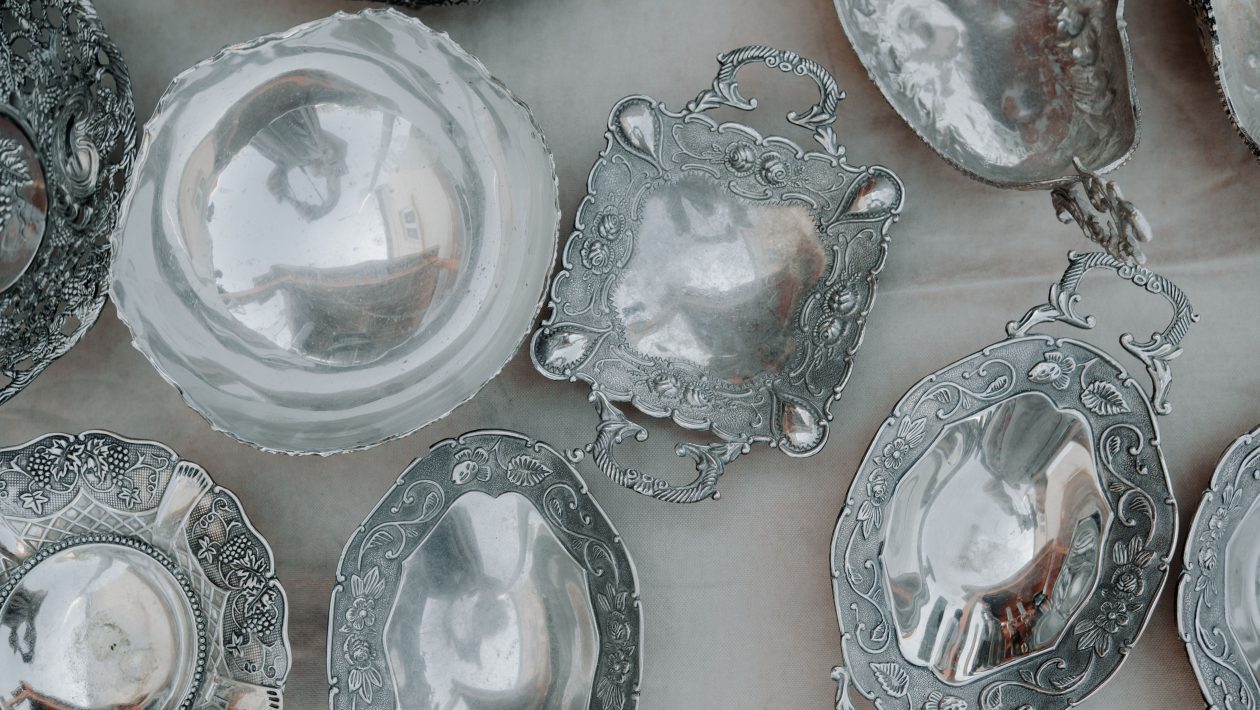
In terms of silver, it is better to have more than one form of the metal. For example, ETF units can be used as a systematic way to create wealth. Coins and small bars are great for gifting and selling in case of need. Finally, traditional silver articles can be used to pass on the family treasure to the younger generation.
One should review the allocation to silver once a year. If the price of silver has increased significantly and the share of this metal in one’s portfolio has grown too large, it might be a good time to book some profits. On the other hand, if the price of silver has dropped considerably, but the goals that one set remain the same, no action is required.
Involve the Whole Family
Silver can serve as a great teaching tool for young children. Parents should explain to their older children the fundamentals of wealth building and show them how one sets goals and buys silver. They can also teach the younger ones how one examines a hallmark, verifies a bill and stores silver articles in safe places.
Parents can also share the responsibility for silver investing with a spouse or a close relative, but they should always keep the latter informed about their intentions. Maintaining a simple spreadsheet that shows the purchases made, the bills received and the storage places used will simplify things considerably.
Review, Adjust and Stay Disciplined
It is a good idea to review one’s strategy once or twice a year. One should ask oneself if the original goals still remain relevant and if the income now allows for a more significant allocation to silver. If inflation has eroded the value of one’s portfolio, it might now be a good time to increase the allocation to silver.
However, panic selling should be avoided as silver prices are likely to recover later. Patience is key to successful silver investing as family finances grow and the family members learn the intricacies of the market. After all, markets will rise and fall, festivals will come and go, as will headlines in the newspaper.